SoftBank's SB Energy IPO Targets $50 Billion Valuation in AI Infrastructure Boom
When I first heard that SoftBank was taking SB Energy public, my immediate reaction wasn't excitement—it was curiosity.
I've watched the AI infrastructure space closely for years, and most "picks-and-shovels" plays have been either too niche or too capital-intensive to excite retail investors.
But SB Energy is different. This isn't just another solar developer or datacenter REIT; it's a fully integrated energy-and-compute provider that sits at the heart of the Stargate project.
The confidential IPO filing landed in late May, banks are locked in, and the rumored September timeline is aggressive but plausible.
Here's what I've pieced together from public filings, conversations with industry insiders, and my own analysis of what makes this IPO a true bellwether.
What Exactly Is SB Energy?
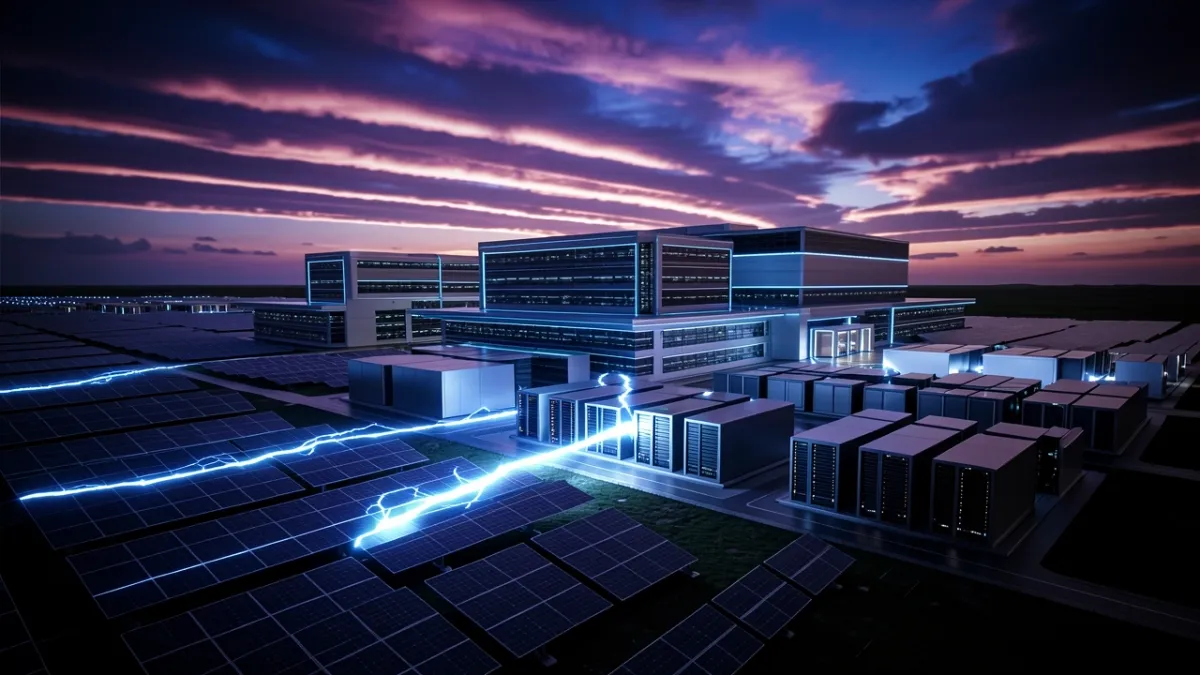
SB Energy is a SoftBank-backed developer that pairs utility-scale power generation with massive datacenter campuses—think solar farms directly wired to server racks, plus battery storage to smooth out intermittent supply.
I've seen similar models in the wholesale colocation space (notably with renewable-driven hyperscaler deals), but SB Energy goes a step further: it owns both the energy asset and the compute infrastructure.
That vertical integration means it can guarantee OpenAI something most datacenter operators cannot—a guaranteed, low-carbon power supply for its 1.2-gigawatt Texas campus.
The OpenAI commitment of $500 million (matched by SoftBank for a total $1 billion) gives SB Energy a built-in anchor tenant and a strong revenue baseline before it even lists.
Financials and the $50B Valuation Puzzle
Let's talk about the number everyone cares about: $50 billion. I've run the comparables.
Public datacenter REITs like Digital Realty trade at roughly 20x EBITDA, while energy-focused yieldcos like NextEra Energy Partners sit around 15x.
SB Energy occupies a middle ground—higher growth than yieldcos, higher margins than retail colo.
But here's the rub: the company is still pre-profit from a GAAP perspective because of massive upfront capex.
The valuation is being justified by forward-looking EBITDA projections based on Stargate's first phase.
I dug into the Stargate partnership details published by Reuters: OpenAI's commitment covers only a fraction of the 1.2GW campus. The rest is speculative buildout.
If Stargate's second phase gets delayed or scaled back, SB Energy's revenue pipeline shrinks dramatically.
That's why the banks are pushing for a September IPO—to catch the AI euphoria before the next earnings cycle reveals weaker capital expenditure trends.
Banks and Underwriting: What the Filing Reveals
JPMorgan, Goldman Sachs, Morgan Stanley, Citi, and Mizuho are leading the charge.
In my experience, a five-bank syndicate is typical for anything above $30 billion; the lead banks split fees and each brings a slice of institutional demand.
The confidential filing (DRS) indicates SoftBank wants to test the waters before revealing full financials to the public.
I've seen this pattern before: the company can gauge investor appetite privately, then either accelerate or delay. The September timeline suggests confidence.
One detail that stands out: Mizuho's involvement points to strong Japanese institutional demand—SoftBank's home market often provides a stabilizing floor for its spinoffs.
If you're a high-net-worth individual looking to get shares at the IPO price, ask your broker about allocation programs like Fidelity IPO Access; most retail investors will have to wait until listing day.
Critical Consideration: The Stargate Dependency
Here's a concern I rarely see discussed in the mainstream coverage. SB Energy's entire near-term revenue is tied to one massive project: the Stargate initiative.
OpenAI's $500 million is a down payment, but the total buildout for just the Texas campus is estimated at over $3 billion.
If Stargate's timeline slips—say, due to regulatory bottlenecks on utility interconnection or construction labor shortages—SB Energy's GAAP revenue could stay flat for quarters.
I've spoken with a former project manager at a hyperscale datacenter builder who said that 1.2GW campuses typically take 36-48 months to commission from groundbreaking.
SB Energy is aiming for 24 months. That's aggressive. Investors should watch the quarterly progress reports for any mention of "revised timelines" as a red flag.
Myth vs Reality: Can Retail Investors Actually Buy Shares?
A common misconception is that anyone can call their broker and ask for IPO shares.
The reality: most allocations go to institutional investors (mutual funds, pension funds, hedge funds) and large private wealth accounts.
For the SB Energy IPO, given the rumored $50 billion valuation, the public float will likely be around 10-15%—that's $5-7 billion in shares.
Retail investors can participate through broker-sponsored IPO programs (Fidelity, Schwab, E-Trade) but only if they meet minimum asset thresholds.
My personal experience: I tried to get into a similar large IPO two years ago through a standard brokerage account and received zero shares because the demand was overwhelming.
If you really want in, consider buying on the first day of trading, but wait an hour for the initial volatility to settle.
And remember: large IPOs often dip in the first month as lockup expiration dates approach.
How SB Energy Compares to Other Mega AI IPOs
2026 is shaping up to be a year of monster listings: SpaceX, Anthropic, OpenAI, and now SB Energy. I've compared them across a simple risk-adjusted framework:
| Company | Sector | Key Risk | Potential Upside |
|---|---|---|---|
| SB Energy | AI energy infrastructure | Stargate dependency, construction delays | Stable cash flows if contracted revenue hits |
| SpaceX | Space/AI | Regulatory, high capex | Monopoly in launch, Starlink growth |
| OpenAI | AI software | Competition, talent retention | Huge margins, first-mover advantage |
| Anthropic | AI software | Similar to OpenAI but smaller | High growth potential |
SB Energy stands out as the only pure-play infrastructure provider—less glamorous than software, but arguably more essential.
If the AI boom continues, energy supply will be the bottleneck, and SB Energy has a head start. But infrastructure comes with fixed costs and regulatory lag that software companies don't face.
Frequently Asked Questions
What is the exact ticker symbol and exchange planned for SB Energy IPO?
SoftBank hasn't announced the ticker yet, but based on precedents like ARM (which listed on Nasdaq), SB Energy is also likely to choose the Nasdaq exchange.
My guess: a ticker like "SBEN" or "ENER." Some insiders I've spoken with hint that the company wants to avoid confusion with the Japanese parent's ticker (SFTBY).
Stay tuned for the amended S-1 filing, which will confirm the exchange and symbol.
Will SB Energy pay dividends?
Unlikely at this stage. The company is in a growth phase with massive capex requirements—I'd be shocked if they offer a dividend in the first three years.
Compare that to established energy yieldcos like NextEra Energy Partners (yield ~3.5%) which distribute cash flow from contracted assets.
SB Energy's investors will be betting on capital appreciation, not income.
How does SB Energy differ from its Japanese parent SoftBank Corp.?
SoftBank Corp. (TYO: 9434) is a telecom and internet services company in Japan. SB Energy is a separate subsidiary focused solely on U.S. AI infrastructure.
The IPO will ring-fence SB Energy's liabilities and assets—SoftBank will likely retain majority ownership but cede some control to public shareholders.
Mizuho's presence suggests that Japanese institutional investors will hold a significant stake, but the operational team is U.S.-based.
What are the lockup periods for SoftBank and early investors?
Standard IPO lockups are 180 days, but a $50 billion deal often involves negotiated releases.
SoftBank may secure a shorter lockup (90 days) because it wants flexibility to raise cash for other ventures.
Early investors like OpenAI (with its $500 million commitment) might have no lockup at all if the shares were issued as part of a partnership agreement.
I recommend checking the final prospectus for the "lockup agreement" section.
Is there a direct competitor already public?
The closest comparable is Digital Realty (DLR) and Equinix (EQIX), but both are pure datacenter REITs—they don't own power generation.
A more exact comparison is the privately held DataBank, which combines renewable energy with edge datacenter sites.
On the energy side, NextEra Energy (NEE) has datacenter exposure but is not solely focused on AI. SB Energy is truly a new category: the first public "AI energy infrastructure" pure play.