Nvidia PAIR creates a home data center from devices you already own

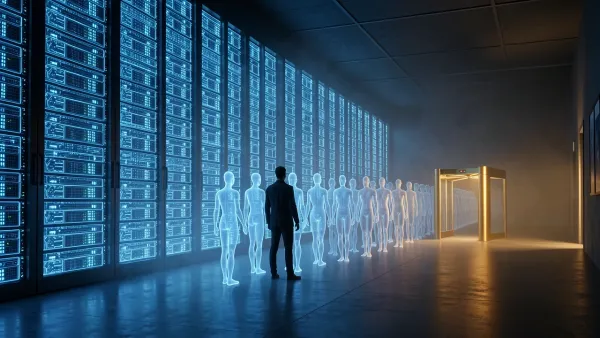
Nvidia has quietly turned every laptop and desktop you already own into the building blocks of a personal data center.
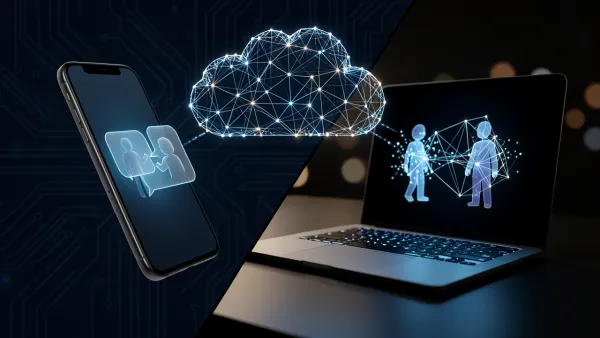
The new free, open-source software tool called PAIR—short for Personal AI Router—lets you connect multiple computers on your home network into a coordinated compute cluster.
Instead of buying expensive new hardware or paying monthly cloud fees, you can now repurpose idle machines to run local AI tasks like analyzing files, writing code, or managing schedules.
For users in the UAE, Saudi Arabia, and the wider Middle East who are increasingly cautious about data privacy and subscription costs, this is a practical way to get enterprise-level AI power without sending sensitive information to remote servers.
PAIR, announced at IFA 2026 in Berlin, solves a growing bottleneck: running local AI is compute-intensive, and most homes lack a single ultra-powerful machine to handle everything.
The tool acts as an intelligent traffic controller, breaking a single task into sub-tasks and assigning each to a different machine on your network.
Those sub-tasks run in parallel rather than queuing up on one device, dramatically accelerating complex jobs.
Importantly, PAIR does not pool VRAM or split a single model across systems—it keeps each machine working on complete, independent sub-tasks.
This means you don’t need specialized server racks or complex cluster setups; just a standard home network and compatible devices.
The hardware requirements are surprisingly modest.
A machine needs at least 8GB of RAM and 20GB of disk space, plus one of the following: an Nvidia GeForce RTX 20 Series GPU or newer, an RTX PRO workstation GPU, an Nvidia DGX Spark or GB10, or Apple M4 silicon or newer.
Operating system support covers Windows 11, macOS Tahoe, Ubuntu, and DGX OS.
Because PAIR works over your home network, it dynamically discovers compatible machines as they join or leave—no special cables or configuration needed.
All prompts, files, and agent context stay entirely local, and after downloading the necessary models, the system can even run with zero internet connectivity.
Our analysis suggests this move positions Nvidia to dominate the next frontier of computing: the shift from manual app usage to autonomous, agentic AI that runs at the edge, inside your home instead of in a distant data center.
By giving users a free tool that turns existing hardware into a private AI cluster, Nvidia creates a powerful incentive to buy its GPUs and laptops—like the upcoming RTX Spark models—while simultaneously offering an escape from subscription fatigue.
For households and small businesses in the Middle East, where data privacy regulations are evolving and cloud costs can add up, PAIR offers a compelling alternative.
You can repurpose machines bought from local retailers like Sharaf DG, Jarir Bookstore, or Amazon.ae without needing any new investment.
What does this mean for the average user? First, it removes the need to trust third-party cloud providers with personal files, photos, or agent context.
Second, it turns unused devices—old laptops, secondary desktops—into valuable assets.
Third, it opens the door to running sophisticated AI agents for household tasks like organizing schedules or managing personal finances, all without monthly fees.
For those ready to try it, the software is a free download from Nvidia’s website, with a demo video showing a Hermes agent running five sub-agents in parallel.
Before downloading, check that each machine meets the minimum specs and runs a supported OS.
Once set up, you effectively have a home data center that grows more powerful as you add devices—and it never sends your data anywhere you don’t control.
Source: Based on reporting from Nvidia’s official announcement at IFA 2026 and the original article published by the source material provider.