Bill Gates proposes a robot tax to slow AI job losses
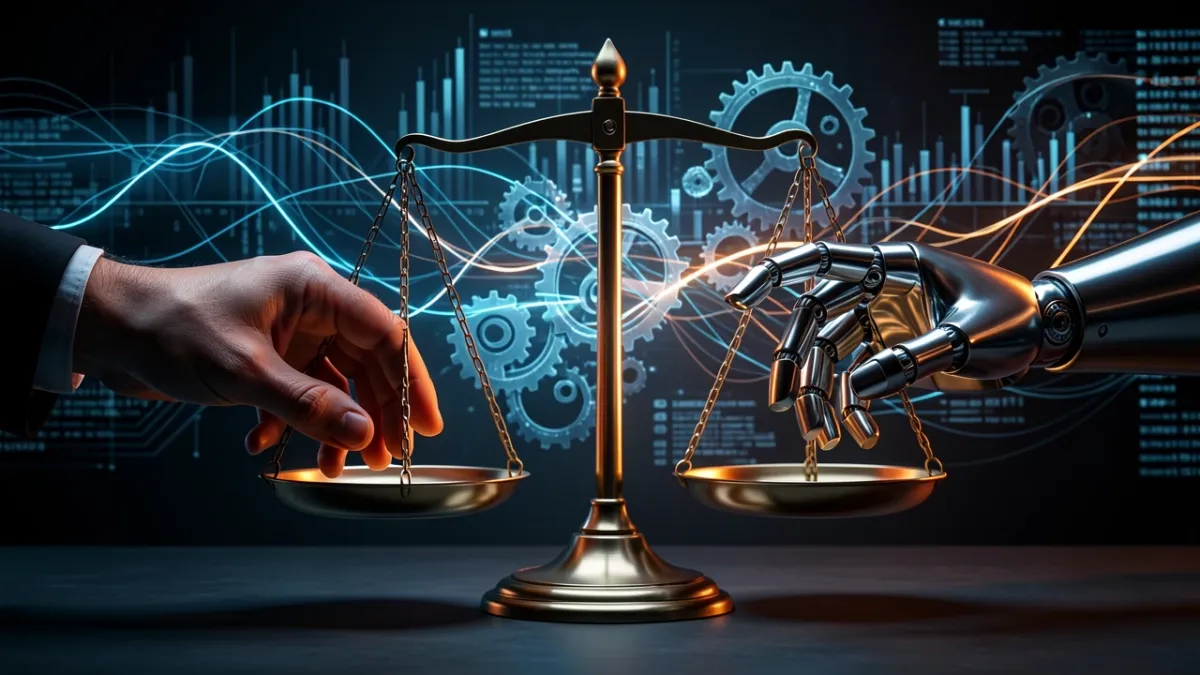
In a move that could reshape how governments respond to artificial intelligence, Bill Gates has resurrected a controversial proposal: a tax on robots and AI tokens.
The idea, which he first floated years ago, is now being pitched as a practical brake on the speed at which machines replace human workers.
Gates argues that without such a levy, the economic incentives will push companies to replace people faster than society can adapt.
"Right now, if you're an employer and you hire someone, you pay payroll taxes on their earnings.
But if you buy a robot, you can usually write it off right away as a business expense," Gates writes. "The tax system nudges you toward replacing people with machines." His solution is to rebalance the tax code so that automation carries a cost, slowing the rush away from human labor and generating revenue for retraining programs and a stronger social safety net.
Gates acknowledges the pushback. Critics say the tax is economically inefficient—it could slow innovation and raise costs for businesses.
But he counters that efficiency isn't the only metric that matters. "They're not considering the broader value of work for individuals and society," he notes.
With AI accelerating productivity, he believes society can afford "a little inefficiency as the price for keeping people employed."
The proposal comes at a time when Gates warns that AI will eliminate many entry- and mid-level jobs across white-collar and blue-collar sectors.
He predicts that "smart" robots will begin competing with humans on physical tasks in construction and hospitality by the end of the decade.
The combination of AI and robotics, he says, creates a "vicious cycle" where early adopters gain cost advantages, forcing competitors to follow suit.
How a Robot Tax Would Work
Gates doesn't lay out a detailed rate or structure, but the core idea is simple: treat automation like labor.
Instead of allowing full depreciation of robotic equipment, a tax would be applied per robot or per AI "token"—the computational unit used in AI systems.
The revenue would fund retraining, income support, and community aid for displaced workers.
He stresses that the tax must be targeted to avoid slowing beneficial uses of AI, such as in medicine and education.
Our analysis suggests that such a tax could buy time for workers and policymakers.
Even a modest levy would raise the cost of replacing a human, giving companies pause and encouraging them to retain staff or phase in automation more gradually.
It would also create a dedicated funding stream for the "new system for managing the transition" that Gates calls for—a national and international framework to handle AI's sweeping effects.
However, the devil is in the details. A poorly designed tax might simply push automation offshore or into unregulated small businesses.
And defining what counts as a "robot" or "AI token" is fraught with technical and legal complexity.
Gates himself admits the idea is "not the whole solution," but insists it's "part of a wise response."
What This Means for Workers and Small Businesses
For ordinary workers, the robot tax signals that governments are finally taking job displacement seriously. If adopted, it could slow the pace of layoffs and give people more time to reskill.
But it's not a magic bullet.
Gates emphasizes that workers will still need to adapt—learning new skills, especially those that AI cannot easily replicate, like complex human interaction and creative problem-solving.
For small businesses, the implications are mixed. A robot tax could level the playing field by making automation less attractive for large corporations that can afford to invest heavily in machines.
But it could also raise costs for small firms that genuinely need automation to compete.
The key is to ensure the tax is paired with subsidies or credits for small companies that invest in human workers.
Our advice to readers: Stay informed about local and national policy debates on AI taxation. Advocate for a balanced approach that includes worker retraining funds.
And if you're an entrepreneur, consider how you can combine human talent with AI tools rather than replacing people outright.
The goal, as Gates puts it, should be to "maximize the positive effects of this unprecedented technology and minimize the bad."
Looking Ahead
Gates' robot tax is unlikely to become law overnight, but it has already reignited a crucial conversation.
As AI capabilities surge, the gap between those who benefit and those who lose will widen unless deliberate policy steps are taken.
The billionaire's proposal—flawed and incomplete as it may be—forces us to ask a fundamental question: Should we let market forces alone decide the speed of job displacement, or should society intervene to slow the ride?
In Gates' view, the answer is clear. "We have to think now about how to reduce job losses so that everyone can share in the prosperity that AI creates," he writes. "Waiting until people are already displaced or underemployed will be too late." Whether through a robot tax or other measures, the time to act is now.
Credit: This article is based on Bill Gates' essay "The turbulent AI era is here. The choices we make now are critical," published on GatesNotes.