Why Thailand's Aging Population is Becoming an AI Testing Ground
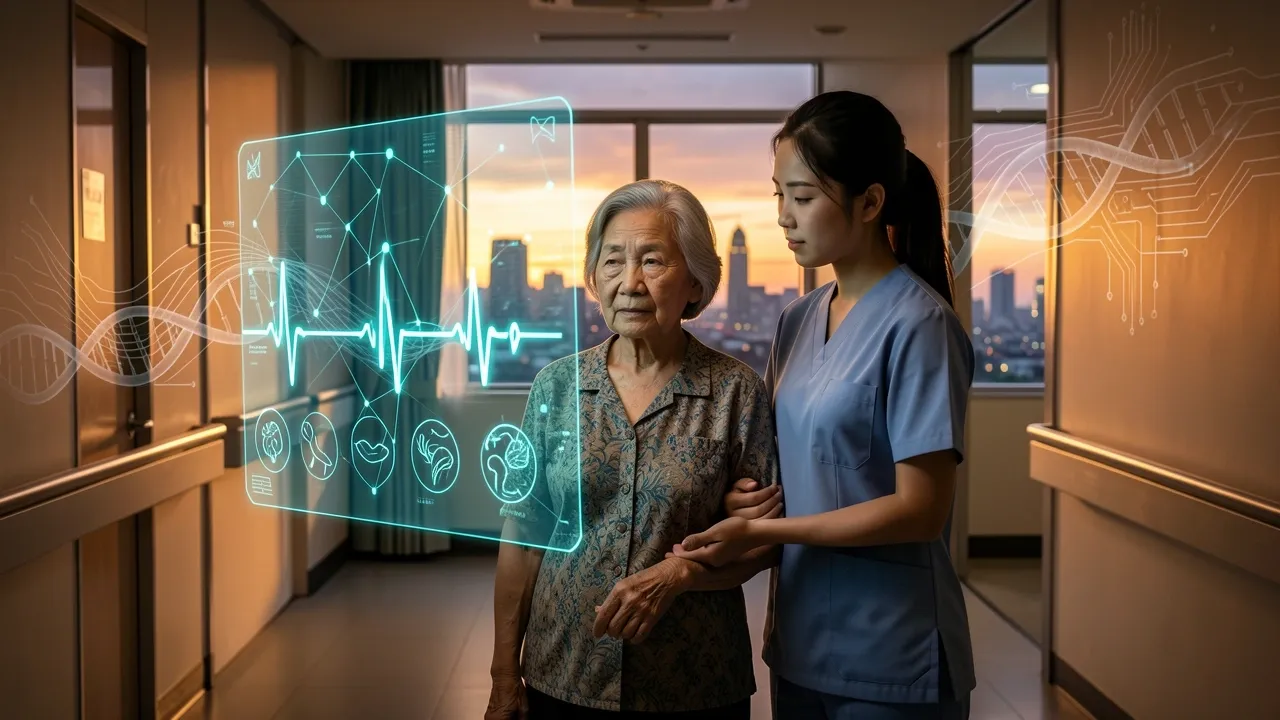
Thailand's rapidly aging population isn't just a demographic challenge—it's turning the country into a real-world laboratory for artificial intelligence.
The rising demand for new approaches to healthcare, prevention, and independent living is now the driving force behind a unique public-private partnership between OpenAI and Thailand's Ministry of Higher Education, Science, Research and Innovation (MHESI).
The partnership, announced today in Bangkok, launches an eight-week accelerator program that brings together ten startups working on health, wellness, and education—areas where the country's demographic shift creates both urgency and opportunity.
What makes this initiative stand out is not just the technology but the context.
Thailand ranks among the top 20 countries globally for ChatGPT weekly active users, and since the start of 2026, weekly active usage of OpenAI's Codex in Thailand has grown more than 350-fold.
This deep adoption of AI tools among the population means startups are building products for a user base that is already comfortable with AI.
Add to that a strong foundation of technical talent and deep domain expertise in healthcare and education, and the conditions are ripe for rapid prototyping and deployment.
The accelerator's first cohort includes five startups focused on medical and wellness AI, and five working in education.
Among them, CARIVA is developing a multilingual voice agent for hospital phone lines.
Designed to communicate in a patient's preferred language, it can assist with routine requests such as appointment scheduling and recognize when a caller may be describing a medical emergency.
During the accelerator, CARIVA will work with OpenAI on evaluation methods and steering strategies for its real-time speech model.
By Demo Day, the team aims to deploy the first capability in a pilot hospital's live call flow.
This kind of innovation directly addresses the strain on healthcare systems caused by an aging population—where fewer caregivers must support more patients, many of whom may speak different languages.
Curico, another participating startup, is developing AI-powered learning tools for children, families, and educators.
While education is not directly about aging, the broader picture is that preparing the next generation for a digital economy is critical for a country where the workforce is shrinking.
Curico aims to pilot its platform in Bangkok childcare centers, train teachers, and test AI-assisted grading at universities.
These efforts are part of the longer-term strategy to maintain economic competitiveness as the population ages.
Our analysis suggests that Thailand's aging population is not just a local concern but a preview of what many countries will face in the coming decades.
In fact, the World Health Organization projects that by 2050, the global population aged 60 and older will double to 2.1 billion.
The solutions being tested in Thailand—voice agents for hospitals, AI tools for independent living, and digital learning platforms—could become templates for other nations facing similar demographic shifts.
What starts as a pilot in Bangkok could scale to hospitals and schools worldwide.
For ordinary people and small companies, the implications are clear. First, if you are a startup founder or entrepreneur, look for similar public-private partnerships in your own country.
Governments are often eager to support AI innovation in high-need areas like healthcare and education.
The OpenAI x MHESI model provides a blueprint: combine government resources, university expertise, and private sector API credits and mentorship.
Second, if you are a caregiver or an older adult, keep an eye on products like CARIVA's voice agent.
These tools are not science fiction; they are being tested now and could become widely available within a year.
Third, for small businesses, consider how AI can automate routine tasks—like appointment scheduling or customer inquiries—to free up human staff for more complex work.
The startups in this accelerator are proving that even small teams can build reliable, trustworthy AI products with the right support.
The accelerator will conclude with a Demo Day in Bangkok in November, where participating startups will showcase their products and present evidence from users.
OpenAI and MHESI aim to establish a repeatable model that helps Thai founders build trusted AI products and take solutions developed in Thailand to the world.
As the aging population reshapes economies, the experiments happening in Thailand today may well define the care and support systems of tomorrow.
Source: OpenAI blog post, "Supporting Thailand's next generation of AI startups,". Information about the accelerator, participating startups, and usage data is drawn from that source.