Salazar Says There Are ‘No Consequences’ for Leaving Early
In a revealing moment on Capitol Hill, Representative Maria Elvira Salazar (R-Fla.) has essentially confirmed what many insiders whisper but few will say publicly: leaving legislative work unfinished carries "no consequences." Her blunt assessment cuts through the standard political theater and exposes a real gap between public duty and private incentives in Congress.
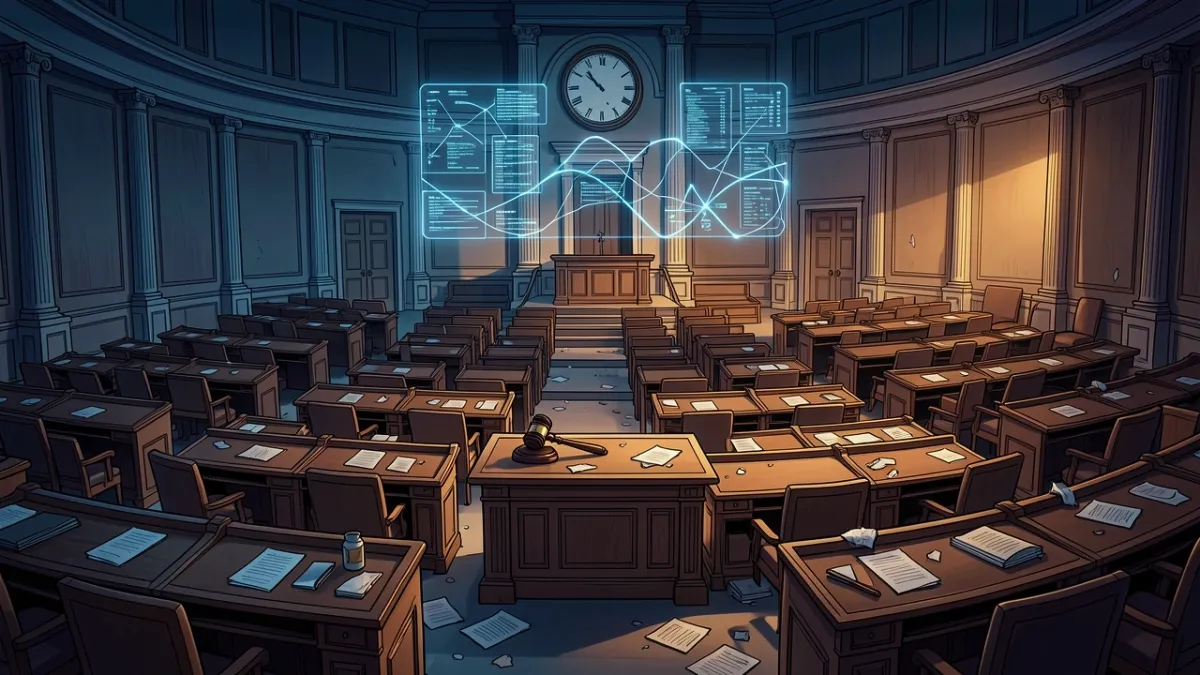
The remark came as Republican leaders scrambled to kill rumors that the chamber would wrap up its September session ahead of schedule.
Many House members are eager to hit the campaign trail or simply head home.
But Salazar's candor—stating plainly that there are no penalties for cutting out early—raises a deeper question about accountability in a job that often runs on unspoken rules rather than formal sanctions.
To be fair, Republican leadership is pushing back against the idea of an early exit.
Representative Mike Simpson (R-Idaho) insisted, "We're not leaving early," and pointed to remaining must-pass legislation like the annual defense policy bill.
But even Simpson's version of productivity is modest: he downplayed any chance of tackling AI data center legislation this year, saying, "It's something that ought to be debated and discussed, but I don't know that we can do that between now and the end of the year." That language—ought to be debated—is a polite way of kicking the can.
The most telling detail in this story is actually a procedural one: two Democrats helped Republicans clear a vote, suddenly freeing up the rest of the week.
That unusual cross-aisle cooperation allowed the majority to claim progress without actually taking on hard debates.
Our analysis suggests this partnership might be more about optics than governance—a way to show activity without the heavy lifting of real lawmaking.
What this means for ordinary citizens and small businesses: When lawmakers say there are no consequences for leaving early, they're signaling that urgent issues—like data center regulation, which affects local land use and energy costs—will likely stall.
For a small business owner worried about rising utility rates due to data center demand, or a homeowner facing a proposed facility next door, this means no help is coming from Washington soon.
The practical advice here is to engage at the state and local level instead.
State legislatures and city councils have more direct control over zoning and energy policy, and they tend to move faster when voters apply pressure.
Salazar's comment, while offhand, captures a deeper structural flaw: the absence of any formal mechanism to enforce productivity. No paycheck docked. No ethics complaint. No lost committee assignments.
Just a shrug and an early flight home. Until voters make local turnout and attendance a campaign issue, the incentives will stay misaligned.
The coming weeks will test whether the House can finish its must-pass bills before the fiscal year ends.
But if history is any guide—and if Salazar's reading of the room is correct—the real work will wait for a crisis.
Credit: Original reporting by Nicholas Wu.