NYC lets high schoolers use limited AI but blocks Claude and ChatGPT
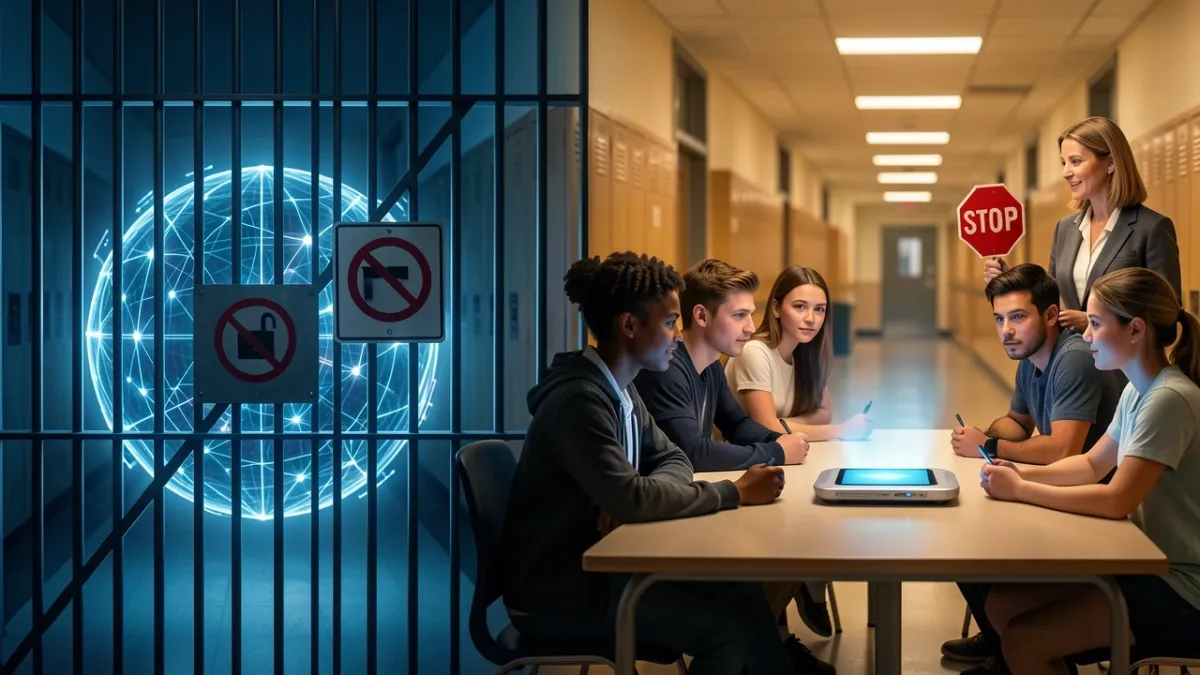
New York City has drawn a sharp line in the sand for artificial intelligence in its public schools: high school students may use approved AI tools, but the two most popular platforms—ChatGPT and Claude—remain off-limits entirely.
The policy, announced Wednesday by Mayor Zohran Mamdani and Schools Chancellor Kamar Samuels, creates a two-tier system that treats younger children and older teenagers very differently when it comes to generative AI.
For students in pre-K through eighth grade, the ban is total. No generative AI tools are allowed for learning or assignments.
The city says this protects younger children’s ability to think independently and maintain strong relationships with teachers and classmates. “The tech industry wants us to believe that AI in early education is not only inevitable, but that it is necessary,” Mamdani said at a press conference. “We do not see it that way.”
High schoolers, however, get a carefully controlled exception.
They will have access to a limited set of approved AI tools, and the curriculum will include what the city calls “AI critical thinking” instruction.
But the list of approved tools does not include ChatGPT (made by OpenAI) or Claude (made by Anthropic). Both are blocked across all grades, along with AI-powered companion chatbots.
The education department will also remove or disable AI features from more than 38 software programs that were previously approved but no longer meet the city’s new safety and oversight standards.
The city’s reasoning, our analysis suggests, reflects a nuanced bet: older students may benefit from guided exposure to AI, but the most commercially dominant tools carry risks the city is not yet willing to accept.
Mayor Mamdani specifically questioned whether there is enough independent evidence showing that generative AI benefits elementary and middle-school students, pointing to concerns about research funded by companies that profit from the technology.
Teachers are not subject to the same restrictions. They may use AI for lesson planning and other operational tasks, but they are explicitly barred from using it for grading or student assessments.
That distinction hints at the city’s deeper priority: preserving human judgment in evaluating student work, while allowing adults to use AI as an efficiency tool.
The policy is temporary, set for a one-year trial.
A new Technology in Schools Coalition—made up of educators, parents, students, and other stakeholders—will study its impact and recommend future rules.
This means the current ban on ChatGPT and Claude in high schools could be revisited, but for now, the message is clear: the city is not ready to hand over the keys to the most powerful consumer AI tools.
What this means for families and educators
For parents of high school students, the immediate takeaway is that any homework or project relying on ChatGPT or Claude could violate school rules.
Students should ask their teachers which AI tools are approved before using them.
For educators, the policy creates a clear boundary: you can use AI to prepare lessons, but you cannot automate grading—a rule that may require rethinking workflows.
Small ed-tech companies that build classroom-focused AI tools should note that the city’s approval process is now stricter; tools that embed ChatGPT or Claude features will likely be rejected.
The bigger picture points to a growing divide in how public institutions treat AI. New York City, the largest school district in the US, is choosing caution over speed.
Other districts watching this experiment may follow suit—or they may see an opportunity to outflank the city by adopting the very tools it blocks.
For now, the message from City Hall is that human connection in classrooms matters more than technological convenience.
Source material aggregated from reports by CNN and PTI, covering statements by Mayor Zohran Mamdani and Schools Chancellor Kamar Samuels.