OpenAI says 15,000 users tried to steal ChatGPT's model.

More than 15,000 people took part in what OpenAI calls a coordinated campaign to extract — effectively steal — the core technology inside ChatGPT.
At its peak, that many users were working against the chatbot at once, the company says, in an effort it disrupted on 28 July after nearly a month of watching the operation evolve.
This was not a traditional hack.
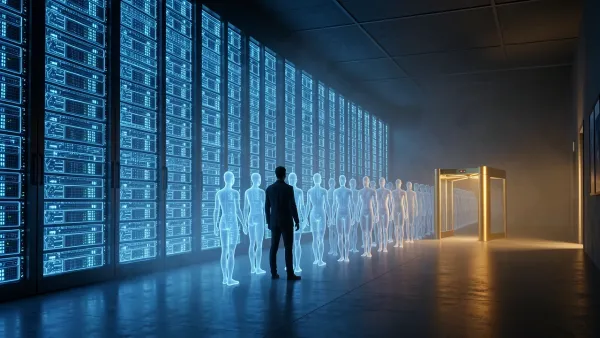
The attackers used a technique called distillation, which involves repeatedly querying an AI system until its behavior and underlying reasoning can be captured and rebuilt elsewhere.
Distillation itself is a legitimate and widely used method in AI research — it helps experts understand how models think and allows large systems to be compressed into smaller, faster versions.
But at this scale, OpenAI says, it becomes a form of industrial-scale theft.
The company has linked at least part of the operation to Moonshot AI, the Chinese developer behind the viral Kimi chatbot, while admitting it is not certain that firm is responsible for all of the activity.
Moonshot AI did not immediately respond to requests for comment from The Independent.
OpenAI's concern goes beyond lost business.
The company warns that distillation attacks could pose "safety and national security risks," because a copied model may not carry the safeguards built into the original.
At the same time, the economics are obvious: gathering the training data, computing power, and energy needed to build a frontier model is immensely expensive, and distillation lets rivals bypass nearly all of that cost.
Experts have suggested this could allow Chinese companies to easily replicate breakthroughs made by US firms such as OpenAI.
The operation began in early July as a low-volume trickle and built steadily from there.
OpenAI says it stopped it with a mix of account shut-downs, bug fixes that concealed the model's internal reasoning from probing users, and help from third-party providers.
It has also shared its findings with governments and other companies so they can watch for the same patterns.
"We expect adversarial distillation attempts to become more sophisticated as frontier models improve and as actors look for cheaper ways to mimic their capabilities," OpenAI wrote. "Defending against this activity requires layered controls and continual adaptation."
Why this matters beyond OpenAI
One way to read this disclosure is as a warning about the openness that made AI so popular. Every public interaction with ChatGPT is a potential probe of the model behind it.
That design made the technology accessible; it also made it stealable.
Our analysis suggests AI providers will respond by hardening their APIs, tightening rate limits, and studying unusual usage patterns far more aggressively.
Some of that friction will spill over onto ordinary users in the form of stricter verification or reduced free access.
For small businesses and developers building on top of AI platforms, the practical advice is to plan for change.
This event raises the likelihood that terms of service shift, pricing structures adjust, or access is restricted while companies rework their defenses.
Diversifying across multiple AI providers, keeping track of internal usage, and documenting AI workflows so they can be moved elsewhere are reasonable steps to take now, rather than after a disruption.
The broader picture is geopolitical.
OpenAI sits at the center of US AI leadership, and its most visible product was the target of a mass extraction effort with at least some links to a Chinese company.
The company says it will keep building stronger protections and better detection tools, and it is pressing governments and the wider industry to share information on similar threats.
Whether this was a one-off escalation or the opening move in a systematic campaign of model theft is still unclear — but the quiet war over who gets to own the intelligence inside these systems has clearly begun.
Credit: Based on reporting by The Independent, which covered OpenAI's announcement.