Elon Musk says Grok's next model will be built by Grok itself
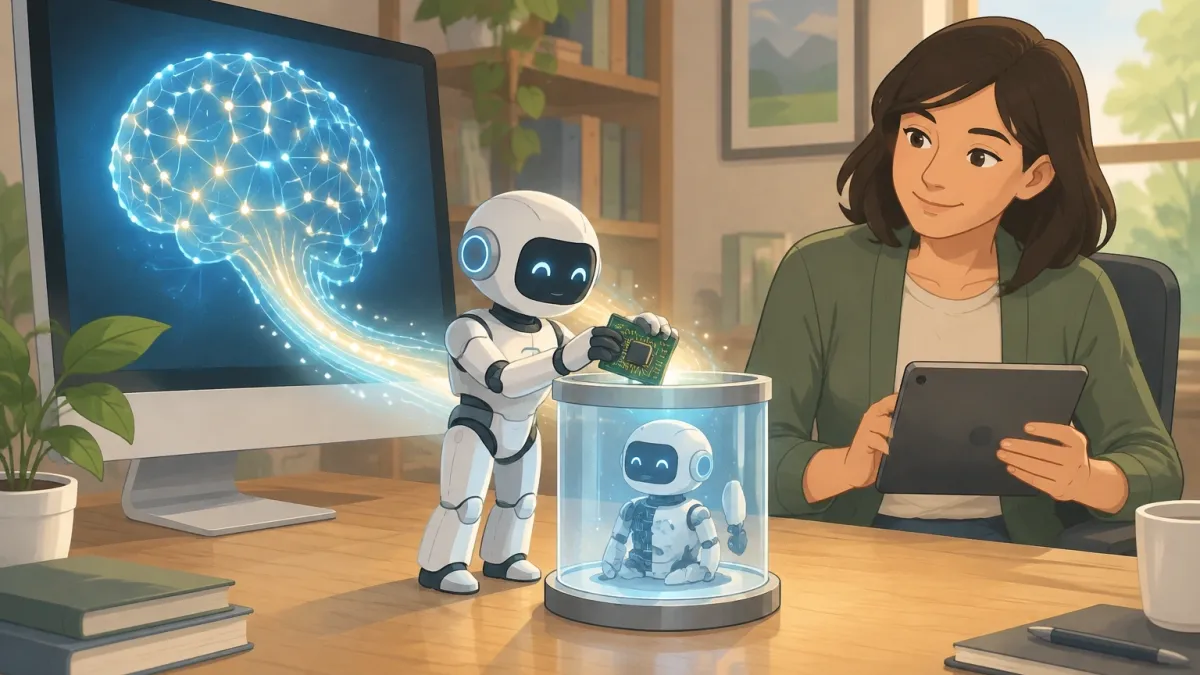
Elon Musk says the next generation of his Grok chatbot will not be built by human engineers — it will be built by Grok itself.
Speaking in March about xAI's Grok models, Musk said "humans are gradually getting less and less in the loop" when it comes to improvement work. "Every successive model is built by the one before it," he said, though he noted the process is not fully automated yet.
The target, he added, might be reached by the end of this year, "but not later" than 2027.
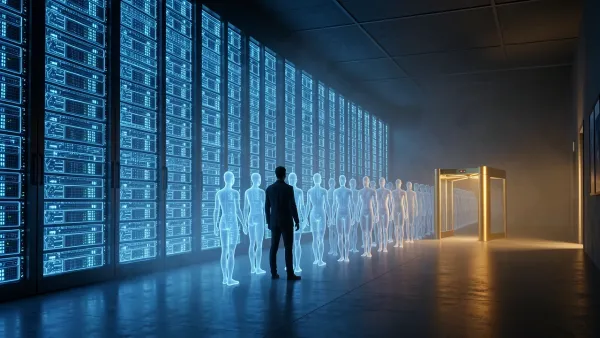
That statement places Musk at the eager end of a race toward what researchers call "recursive self-improvement" — the point at which an AI model designs and builds the next version of itself, which then builds the next one.
For years the concept was a distant ambition in technology research. Today, leading labs are describing it as a working method.
Anthropic said this week that its Claude model now leads 26% of the company's model research and development, meaning Claude can complete most of a given task "end-to-end from a high-level prompt" — still under human supervision, but doing genuine engineering work.
OpenAI, for its part, has introduced an automated "research intern" that handles well-defined research tasks under human direction, including jobs "that would take a skilled researcher a few days," and has said it aims to deliver an automated AI "researcher" by March 2028.
The distance between Musk's claim and these efforts is one of degree, not kind.
Recursive self-improvement in a supportive form has been going on for years, said John Thickstun, a Cornell University computer science professor who studies methods for controlling AI behavior. "We have already, for years, been using these models in supportive roles for creating the next version of these models," he said. "So people use the past generation of models to write code for the AI systems that then create the next generation."
What would make Grok's next model different is the amount of human involvement reaching zero.
Those earlier supportive efforts, including experiments by prominent researchers such as OpenAI co-founder Andrej Karpathy, yielded only minor improvements rather than creative leaps, Thickstun noted.
A model that builds its successor with no human step in between would be a genuine break from that pattern.
Anthony Aguirre, president and CEO of the nonprofit Future of Life Institute and a physics professor at the University of California, Santa Cruz, says the speed of that process is the deepest concern. "The really important thing here is that as AI is doing more of it, it gets faster, because AI operates just much, much more quickly than the humans do," he said.
He called the trajectory "probably the worst idea in the history of humanity" — while acknowledging it is already underway.
An industry split over pace
Not every lab shares Musk's seeming eagerness to forge ahead.
OpenAI has said it does not yet know how to "safely get all the way to aligned, full RSI," and that it "cannot assume that progress in alignment and safety will keep pace" with capability gains — even as it argues that automated AI researchers could double as automated safety and alignment researchers.
Anthropic, a leading voice for pacing, says it would slow or pause its development work if global competitors did the same "in a verifiable manner."
Microsoft, meanwhile, is charting a separate route.
CEO Mustafa Suleyman has said the company is pursuing "humanist superintelligence": AI that is "carefully calibrated, contextualized, within limits," rather than "an unbounded and unlimited entity with high degrees of autonomy."
What a self-built Grok actually changes
Our analysis suggests the most important consequence would be the compression of the improvement cycle itself.
If each model generation can be designed, tested, and shipped by the previous one, development timelines shift from human-scale to machine-scale — months become weeks, and possibly weeks become days, exactly the acceleration Aguirre warns about.
Safety testing and alignment work would then have to keep pace inside a loop humans can no longer directly observe.
There is also a competitive dynamic to consider. Musk's timeline — the end of this year, or at latest 2027 — arrives well before OpenAI's stated 2028 researcher goal.
One way to read this is that xAI's progress could force rivals to accelerate their own autonomous development or lose their place at the frontier.
The calls from several AI leaders last weekend to slow the technology's pace of growth reflect the same underlying worry: once one lab crosses this line, the pressure to follow is enormous.
How to prepare
For everyday users and small companies, the practical response is to avoid anchoring critical workflows to a single AI provider's roadmap.
If Grok — or any model — begins improving itself on a compressed schedule, the tools you depend on today may behave very differently tomorrow.
Diversifying across AI platforms and keeping human review in the loop is a low-cost hedge.
It also pays to ask AI providers directly where they stand on verifiable slowdown commitments, the standard Anthropic itself has proposed.
The era of AI building its own successor is no longer hypothetical. The open question is whose timeline gets there first — and whether the safety work can keep up.
Source material: Associated Press report by Kaitlyn Huamani and Barbara Ortutay.