K-AI Semiconductor Pavilion: Korea's AI chips target daily life at IFA 2026
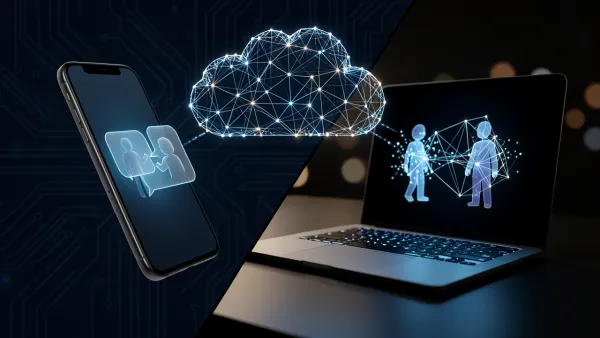
At this year’s IFA in Berlin, the story of Korea’s AI semiconductor push is not about raw processing power or server-farm dominance.
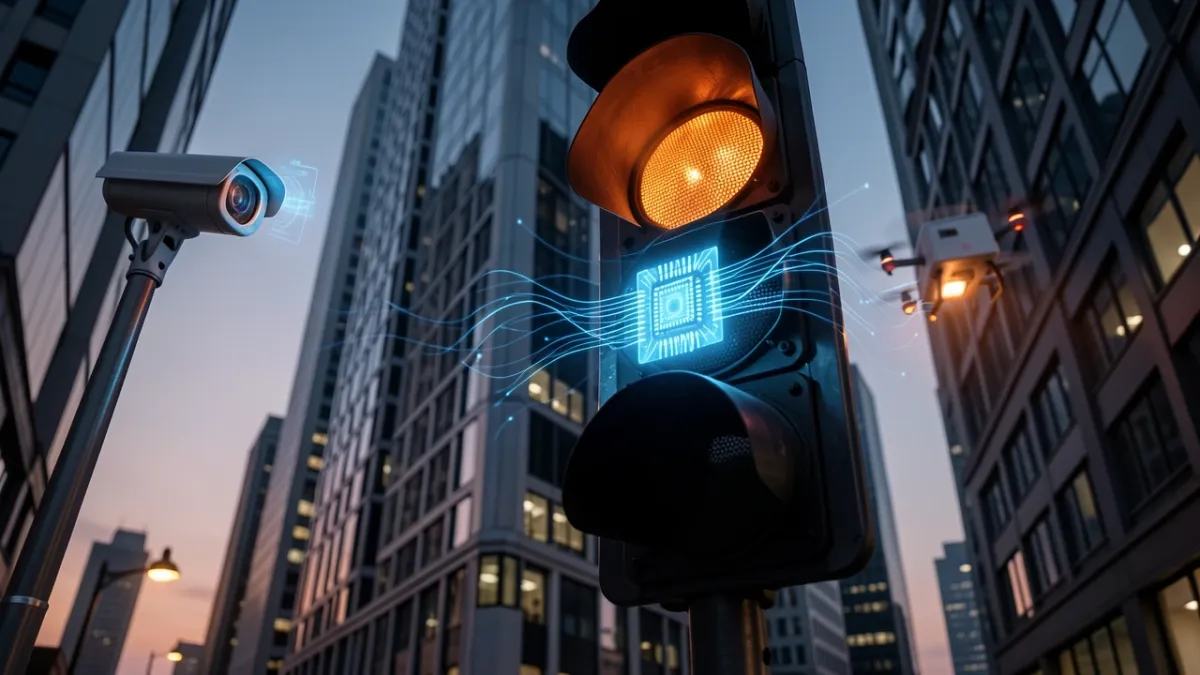
Instead, a dedicated pavilion is making a deliberate bet on the mundane: the chips that will quietly run your city’s traffic lights, your home’s security camera, and the robot that delivers your packages.
The K-AI Semiconductor Pavilion, organised by Korea’s National IT Industry Promotion Agency (NIPA), brings together 12 companies and organisations to show how AI silicon is being redesigned for the edges of daily life rather than the core of a cloud.
The pavilion, located at Hall 5.2b, Stand 400, runs from September 4 to 8. It deliberately shifts the conversation away from large language models and billion-parameter training runs.
Instead, visitors will see Neural Processing Units (NPUs) and on-device AI solutions that are small enough, cheap enough, and power-efficient enough to sit inside a street lamp, a factory sensor, or a delivery drone.
The applications on display cover smart cities, safety systems, mobility, and robotics — all areas where AI must react in milliseconds without phoning home to a distant server.
This is a strategic pivot for a country that has long been known for memory chips and display panels.
NIPA, the public agency behind the pavilion, is betting that the next wave of AI value creation will happen not in the cloud but in the physical world. “Korea’s AI semiconductor technologies move beyond chips to become practical AI solutions across industries and everyday life,” the agency stated, framing the booth as a marketplace of real-world integrations rather than a spec-sheet showcase.
One of the pavilion’s key networking events, K-AI Connect, takes place on September 6 from 16:00 to 18:00, bringing together Korean firms with international buyers, investors, and industry partners.
The underlying message is clear: Korea wants to be the supplier of choice for the next generation of embedded AI, not just a component vendor for hyperscalers.
Our analysis suggests this focus on daily-life AI could reshape how small and medium businesses think about adopting intelligence.
Currently, many companies hesitate to deploy AI because of latency, privacy concerns, or the ongoing cost of cloud subscriptions.
On-device and edge AI chips — the kind being shown at the K-AI Pavilion — solve all three problems at once.
A local retailer, for example, could run real-time foot-traffic analysis on a camera that never sends video outside the store.
A municipal government could deploy smart parking sensors that process data locally and only report results, slashing bandwidth bills.
For ordinary people, the implications are subtle but powerful.
The AI that adjusts your home’s heating based on occupancy, the system that detects a fall and alerts a caregiver, the traffic intersection that adapts to real-time congestion — all depend on chips that can think fast and stay offline.
Korea’s push at IFA 2026 signals that these chips are moving from prototypes to production, and that competition among nations to supply them is heating up.
What should a small company or a tech buyer do with this information? First, look beyond the cloud. When evaluating AI solutions, ask whether the processing can happen on-device.
If the vendor relies on a constant internet connection, consider whether an edge-AI alternative exists — and whether Korean suppliers might offer a more cost-effective path.
Second, attend events like K-AI Connect not just for the demos, but for the partnerships.
The pavilion is explicitly designed to connect technology buyers with Korean firms that can customise NPUs for specific verticals.
A robotics startup, for instance, might find a chip that is pre-optimised for its sensor fusion needs.
Finally, watch for follow-on announcements: the technologies shown at IFA often become commercially available within 12 to 18 months.
The K-AI Semiconductor Pavilion is more than a trade show booth.
It is a signal that Korea is redefining its role in the global AI supply chain — away from the abstract and toward the tangible, away from the server room and toward the street corner.
This article is based on a press release from the National IT Industry Promotion Agency (NIPA) dated September 3, 2026. The original announcement can be accessed via PR Newswire.