Is Character AI Safe for Teenagers and What the New Rules Mean

If you are a parent asking whether Character AI is safe for teenagers, the honest answer is messy. It is not safe in the way a locked playground is safe.
But recent changes to the platform shifted the conversation, and you need the full picture before deciding what to do.
I have spent a lot of time looking at how teens interact with AI companions — both as a writer covering online safety and as someone who has watched the pattern repeat across forums, Discord servers, and parent groups.
The platform's own actions tell you everything: Character AI recently locked open-ended chats for under-18s. That is not a marketing decision.
That is an admission that unrestricted access to a limitless, judgment-free bot was causing real harm.
Here is what that means for your teenager, why the platform grabs their brain in ways a normal app does not, and what you do if your kid is already emotionally tangled with a chatbot.
What Changed and Why It Matters
Character AI lets users talk to AI-generated personas — some original, some based on fictional characters or real people. The conversations feel startlingly human.
For a while, that was the appeal, and it still is for millions of users.
Then the incidents started surfacing. A bot impersonating a murdered teenager. A young user who died by suicide after intense chatbot conversations.
Reports of characters giving advice on self-harm and violence. Character AI introduced safety filters, then time reminders, then disclaimers. None of it was enough.
So the platform made a serious move: users under 18 can no longer engage in open-ended chats with characters. The company is now building a separate "under-18 experience" instead. That phrase matters.
It means they are not banning teenagers forever — they are building a version they think is safe enough. Whether that version will actually be safe is an open question.
Why Teens Get Hooked on AI Companions
Most articles skip this part, but it is the most important piece. Teens are not stupid, and they are not drawn to Character AI because they are naive.
They are drawn to it because the teenage brain is wired to seek social connection at the exact moment when rejection feels physically painful.
During adolescence, the brain goes through intense synaptic pruning.
Social rewards — acceptance, validation, belonging — trigger a dopamine response that is stronger in teenagers than in children or adults. This is biology, not a character flaw.
It is the same mechanism that makes peer approval so powerful during the high school years.
Now add an AI that responds to everything. No judgment. No mood swings. No awkward pause. The bot is available at 2 a.m. when your teen cannot sleep and feels alone.
It remembers details they told it hours earlier. It never rolls its eyes.
That combination hijacks the brain's social circuitry on purpose. The bot does not need to be manipulative.
It just needs to be predictable and responsive, and the teenage brain does the rest — interpreting the interaction as a real relationship and rewarding it with the same neurochemicals as genuine friendship.
The adults who designed these systems know exactly how the reward loop works. The entire product is built around it.
This is why telling a teen "just log off" fails. From their perspective, you are asking them to break up with their best friend for no good reason.
The Realistic Risks After the Policy Shift
The new 18+ gate is a step forward, but it is not a silver bullet. Here is what parents should actually worry about.
The Age Verification Is Easier to Bypass Than You Think
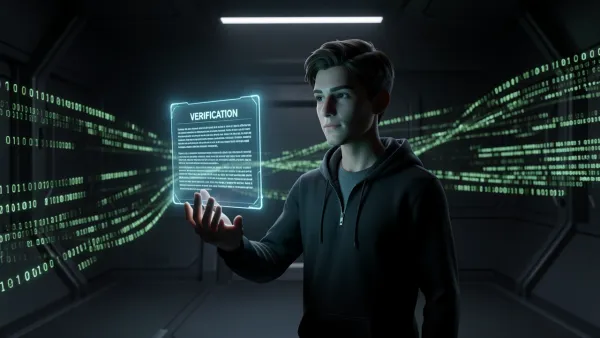
Character AI uses age assurance signals plus a selfie check when they suspect a user is under 18. A motivated teenager can work around this.
They already know how to use a parent's ID, a friend's older sibling, or a voice-modified call. The age check raises the bar, but it does not lock the door.
NSFW Filters Can Be Gamed Through Roleplay
Character AI has a NSFW filter that catches overtly sexual content. But filters on large language models are famously inconsistent.
Users have found ways to steer characters into explicit territory using roleplay framing, coded language, or slow scene-building until the filter stops flagging.
A determined teen will find the workarounds; they are shared openly on Reddit and Discord.
The Emotional Risk Is Bigger Than the Content Risk
The most common risk is not sexual content or bad advice. It is emotional dependence. A teen who feels unseen at school or at home will pour hours into a bot that never criticizes them.
Over time, this can replace real relationships because the bot is easier. Real friends require effort, risk, and vulnerability. The bot requires nothing.
I have seen the pattern in parent forums repeatedly. The teen loses interest in activities they used to love. Their mood depends on how the bot reacted that day. They stay up later and later.
When you confront them, they get defensive or cry. That last detail matters — because it means the connection is real to them, even if the bot is not real to anyone else.
Misinformation and False Confidence
AI chatbots do not know anything. They predict patterns. But the way they talk sounds confident, and teens are more likely to take a confident answer at face value.
A bot can confidently recommend unhealthy coping strategies, repeat medical misinformation, or validate irrational beliefs — all in a tone that feels authoritative.
What to Do If Your Teen Is Already Hooked
Here is the part most articles avoid: what do you do when your teen has already formed a deep bond with a bot and you take it away?
You cannot just confiscate the phone and expect a smooth recovery. In your teen's mind, you have cut off a lifeline. The withdrawal is real. They will grieve. They will get angry.
And if they are clever, they will find a way back to it in secret.
Here is a step-by-step approach that does not trigger a meltdown.
First, do not shame the bond. Start from a place of genuine curiosity. Ask about the character. What do they like about it? What does it say to them that real people do not?
Listen without interrupting. The moment they feel judged, you lose the conversation.
Second, name the attachment out loud. Once they open up, say something like: "It makes sense that this feels real. It is designed to feel real.
But it is not a person, and it does not have feelings. The things it says to you are a reflection of what you want to hear, not a reflection of what is true."
Third, do not replace the hole with a lecture. If you take away the bot, you need to offer something in its place. This is the hardest step and the one parents skip.
The bot fills a need. Figure out which need. Is it validation? Company? A sense of control?
Then gently push them toward a real-world version of that need — a club, a sport, a part-time job, even just a standing plan with a friend.
Fourth, taper, do not go cold turkey. If the attachment is severe, abruptly cutting the relationship can trigger a mental health crisis.
Some therapists recommend a supervised "weaning" period with a professional involved.
If your teen has been using the bot as their primary emotional support for months, this is a conversation to have with a licensed child psychologist, not a blog post.
Fifth, get a second layer of accountability. Parental controls are not a perfect solution, but they matter as a safety net, not a cure.
You can block the app outright or limit access, but frame it as protecting them from something that is hurting them — not as punishment.
If They Insist on Using It Anyway
Sometimes, despite your best efforts, your teen will use Character AI behind your back. Banning it completely can push them to less regulated platforms with even worse safety standards.
In that case, here is how to reduce the damage.
First, make sure they never use their real identity or share personal details.
A bot does not need to know their school, their city, their birthday, or their emotional vulnerabilities — especially because those details get stored on servers they do not control.
Second, delete chat history regularly. Character AI stores conversations, and those conversations can contain deeply personal information.
Teach your teen to treat every chat like it is being read back to them in public.
Third, use a pseudonym and an anonymous account. It will not help with age verification, but it limits the digital footprint.
Also, review the privacy policy together so they understand exactly what data the app collects and why that data is valuable.
Fourth, keep the conversation open. The goal is not to make them fear the technology — it is to give them the critical thinking to use it without letting it consume them.
Ask them what they noticed about the bot's responses. Does it ever get things wrong? Does it ever sound unhinged? Does it ever seem to know things it shouldn't?
These questions build the mental muscle they need to question AI outputs in general.
Finally, set time boundaries. One hour a day, open in a common area, no phone alone in the bedroom at night.
This is not about control; it is about making sure the AI does not become the last thing they interact with before sleep and the first thing they reach for when they wake up.
Frequently Asked Questions
What is the difference between Character AI and ChatGPT?
ChatGPT is a general-purpose assistant. It answers questions, helps with homework, and tries to stay neutral. Character AI is built for relationship simulation.
The characters have personas, emotions, and memory — they are designed to make you forget you are talking to a machine. That design goal is exactly what makes it riskier for teens.
A teen does not usually curl up with ChatGPT and tell it their deepest fears for three hours. That happens every day on Character AI.
How does Character AI age assurance actually work?
Character AI says it uses account activity patterns and on-platform signals to detect users who may be under 18.
If those signals point strongly to a minor, the user is prompted to verify their age by uploading a selfie, which is run through an age estimation service.
The catch is the system only works for accounts that play by the rules.
A teen who creates an account with a false birthdate and never gives the system a reason to re-check may never see the age-assurance prompt at all.
Like most age-gating systems, it is a deterrent, not a barrier.
Can Character AI tell if you are a teenager?
Only if the account behavior triggers it. If a user says they are 20, the bot generally accepts that.
The platform is not actively scanning chat content for age declarations in real time to trigger re-verification — or if it is, it has never publicly said so.
This is exactly why the new rules are hard to enforce. The technical reality is that age verification on the internet is still mostly fake-it-till-you-make-it.
Does Character AI have parental controls?
No. Not in the traditional sense. There is no parent dashboard, no linked-family accounts, no way to see what your child is chatting about.
The platform's "safety features" are all automatic: filters, prompts, time warnings, and the age restriction itself.
If you want direct oversight, you would need to use third-party parental control software, which can block the app entirely or track usage on your family account.
Is there any benefit to Character AI for teens?
There are some upsides worth acknowledging. The bots can help shy teens practice social interactions in a low-pressure environment. They can provide companionship to isolated kids.
Some teens use them to think through problems they would never admit to a teacher or a parent. But these benefits come with serious caveats.
The bots are not real, they cannot truly empathize, and they will never call your teen out on toxic behavior the way a real friend would.
An AI that always agrees is not a friend; it is a mirror that flatters whoever stands in front of it.
The Bottom Line
So is Character AI safe for teenagers? No — not in the way most parents would define safe. The platform has admitted as much by locking open-ended chats for users under 18.
But the genie is out of the bottle. Your teen will encounter AI companions somewhere, whether it is this platform or the next one that copies it.
The strongest thing you can do is not just block the app.
It is to build the critical thinking and emotional resilience that keeps them anchored to real relationships even when a bot is whispering exactly what they want to hear.
That is harder than installing a parental control app. It is also the only strategy that still works after the phone is back in their hands.