House Republicans Lock Down Defense Bill While AI Concerns Fester
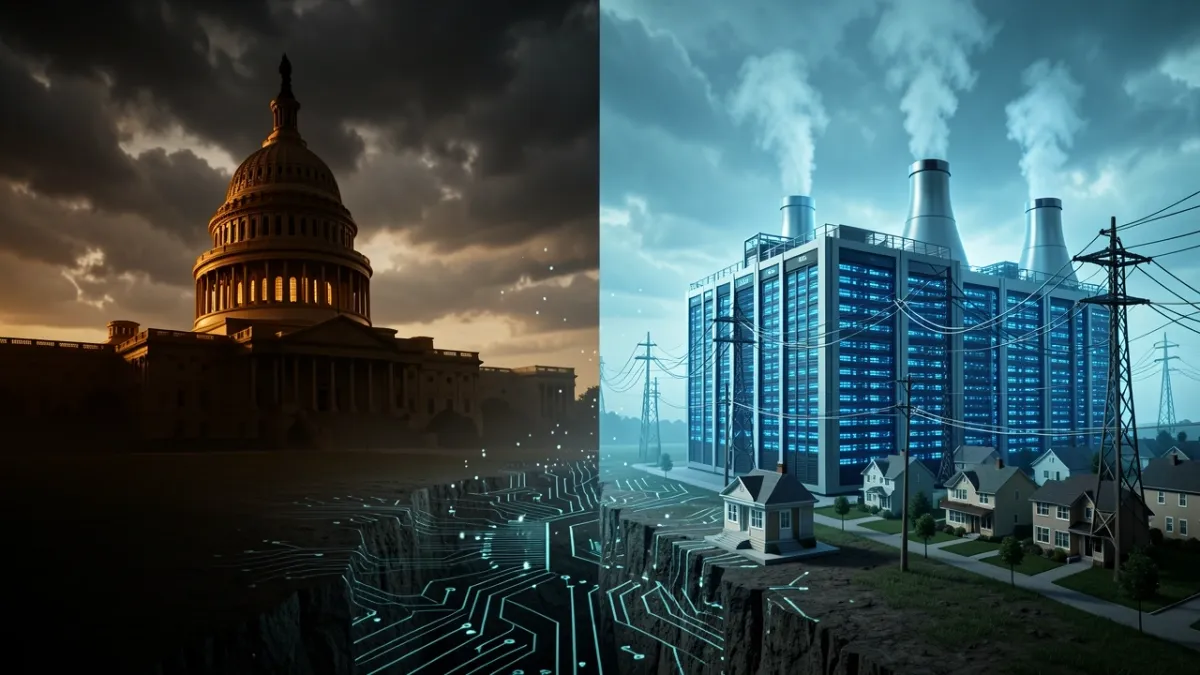
The annual defense policy bill is moving forward in the House, but the debate over AI data center regulation is being left behind—and that gap is starting to worry industry watchers and local communities alike.
Top House Republicans are working to lock down the must-pass National Defense Authorization Act (NDAA) this week, with a procedural vote on Tuesday getting unexpected support from two Democrats.
The move clears the floor for votes on the defense bill, but it also sidelines any immediate action on the growing issue of AI data center projects and their impact on energy grids, land use, and local economies.
Rep.
Mike Simpson (R-Idaho) made the party's stance clear: "We're not leaving early." But when asked about AI-related legislation, he added, "It's something that ought to be debated and discussed, but I don't know that we can do that between now and the end of the year."
This delay comes despite rising voter concerns over the rapid expansion of data centers.
These facilities—often massive, energy-hungry complexes—are proliferating across the country, driven by the AI boom.
Yet while the defense bill enjoys bipartisan momentum, the regulatory framework for AI infrastructure remains a back-burner issue.
Our analysis suggests that this mismatch could create a regulatory vacuum at the state and local level.
Without federal guidelines, towns and counties are left to negotiate their own deals with developers, sometimes without adequate oversight on energy consumption or environmental impact.
For ordinary people, this means potential strain on local power grids and higher electricity costs, while small companies may face unpredictable permitting processes.
The defense bill's progress also underscores a broader dynamic: Republicans are focused on must-pass items to avoid a government shutdown, while emerging tech issues get pushed into an uncertain 2024 calendar.
Rep. Maria Elvira Salazar (R-Fla.) even suggested there would be "no consequences" to leaving early, a view that clashes with Simpson's push to finish work.
What should citizens and small businesses do next? First, pay attention to local zoning board meetings and public hearings on data center projects—these are where the real decisions are being made right now.
Second, consider reaching out to your representative's office directly about AI concerns, since federal action may be delayed until next year.
Finally, small companies that rely on stable energy prices should monitor state-level utility rate cases, as data center demand can drive up costs for everyone.
The defense bill is likely to pass this week, but the absence of AI guardrails is a signal that Washington is still catching up to the technology's real-world consequences.
For now, the action—and the tension—is shifting to state capitals and city halls.