Daybreak for America: OpenAI Puts $1B Into Fixing Legacy Code, Not Just Finding Bugs
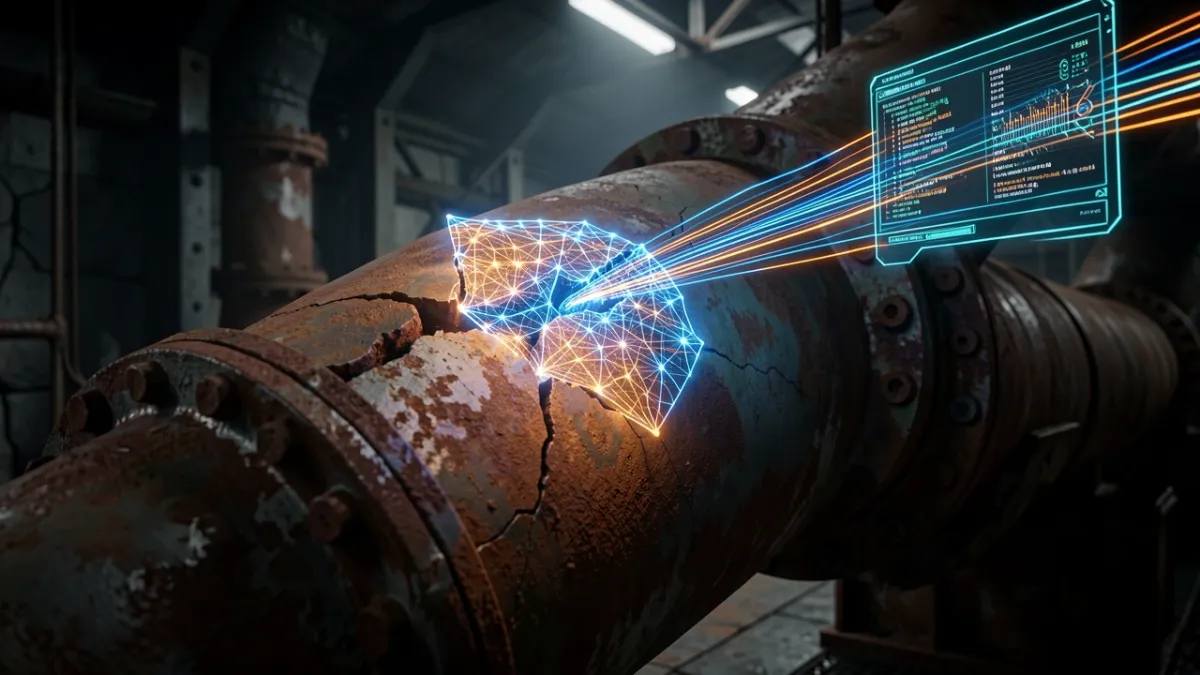
OpenAI is betting big on a problem that keeps cybersecurity professionals up at night: not just finding the holes in America's aging digital infrastructure, but actually patching them.
The company's newly announced $1 billion Daybreak for Frontline Defenders initiative is a significant shift in strategy, moving beyond the typical focus on vulnerability discovery to directly funding the repair of legacy code that underpins water systems, power grids, and local government networks.
For years, the cybersecurity industry has been obsessed with bug bounty programs and penetration testing—essentially, pointing out what's broken.
But for resource-strapped utilities and small municipalities, knowing about a vulnerability is only half the battle.
The real challenge is having the time, money, and expertise to write patches, test them, and deploy them without disrupting essential services.
OpenAI's commitment, directed through its Daybreak cyber models, aims to close that gap by subsidizing the entire fix cycle, from code review to validation and deployment.
Our analysis suggests that this approach is a direct response to a growing reality: attackers are increasingly targeting legacy systems that are too expensive or too risky to replace.
A water treatment plant might run on a 20-year-old control system that cannot be easily updated.
Instead of waiting for a catastrophic breach, OpenAI is offering frontline defenders subsidized access to AI tools that can help them understand the aging code, prioritize the most dangerous flaws, and develop tested fixes—all while the system stays operational.
The initiative's "Daybreak for America" pillar specifically prioritizes operators of essential services like water and wastewater systems, electric grid operators, state and local governments, and community banks.
These are precisely the organizations that operate with minimal security staff and budgets, yet defend the services that millions of Americans depend on every day.
The $1 billion, targeted to be consumed over the next six months, is not a grant in the traditional sense; it is a pool of subsidized API credits, training, and technical support designed to make frontier AI affordable for those who need it most.
What makes this move different from typical corporate social responsibility is the operational focus. OpenAI is not just handing out credits and hoping for the best.
The company has partnered with the Multi-State Information Sharing and Analysis Center (MS-ISAC) to run a pilot that pairs Daybreak access with guided training and hands-on assistance.
This pilot will help state and local defenders validate AI-identified vulnerabilities, coordinate remediation across multiple agencies, and build a repeatable patching workflow.
The goal is to create a model that can be scaled to thousands of public-sector organizations, including schools, hospitals, and law enforcement.
Moreover, OpenAI is sharing its own internal "Defense Factory" architecture—a continuous, agent-first operation that uses AI to find vulnerabilities and prepare tested fixes for human review.
By publishing this blueprint, the company is signaling that it wants defenders everywhere to adopt a similar approach, not just rely on OpenAI's tools.
This is a subtle but important distinction: the value is not in the AI model alone, but in the process of turning raw findings into actionable fixes.
For ordinary Americans, the implications are straightforward.
The water coming out of the tap and the electricity powering your home are increasingly dependent on technology that is old, fragile, and under constant attack.
OpenAI's initiative, if executed well, could buy time for these critical systems while long-term modernization plans are developed.
For small businesses and local governments, the message is clear: check if you are eligible for Daybreak access.
The window to strengthen defenses before AI-powered attacks become routine is narrowing, and subsidized support from a major AI company is an opportunity that may not come again.
The real test, however, will be whether this $1 billion investment actually translates into fewer successful attacks on essential services.
Measuring success will require transparency about how many vulnerabilities were found, how many were fixed, and how many systems were hardened.
But by explicitly tying the funding to fixing legacy code, not just finding bugs, OpenAI has raised the bar for the entire industry.
The era of pointing out problems without providing solutions may finally be coming to an end.
Source: OpenAI Blog (Daybreak for Frontline Defenders announcement, April 2025)