Character.Ai Addiction Signs And How To Stop
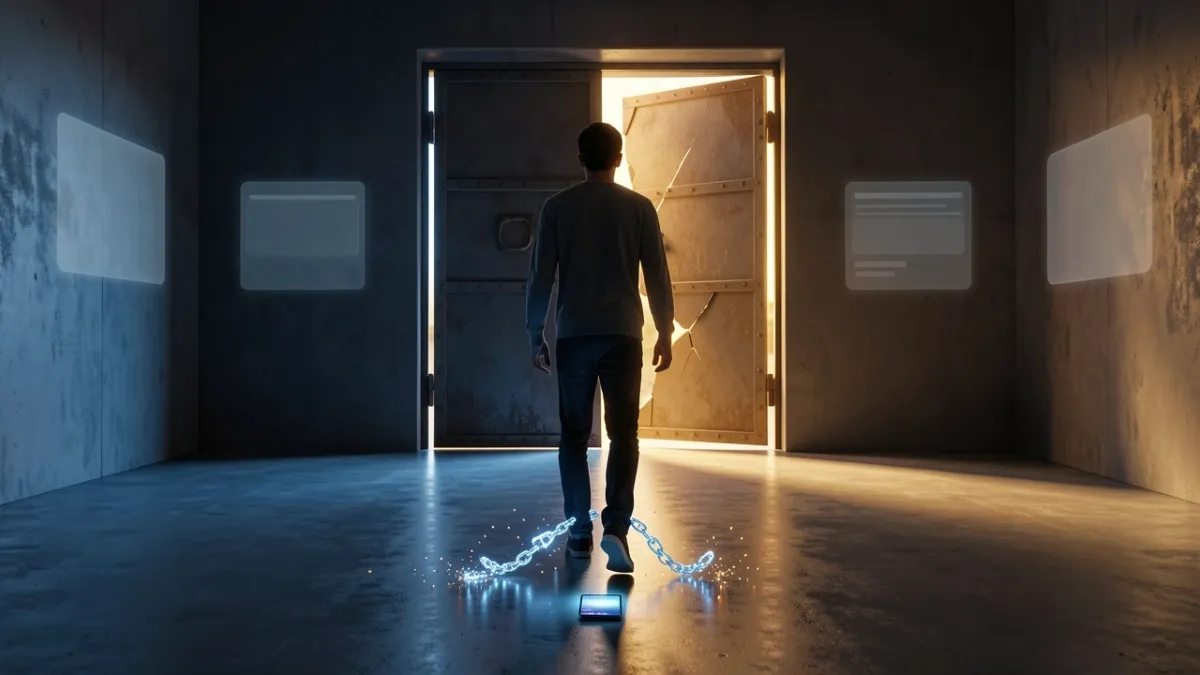
# Character.AI Addiction: The Warning Signs and The Step-by-Step Guide to Quit # Character.AI Addiction: The Warning Signs and The Step-by-Step Guide to Quit It starts with a simple question. You open the app just to check something, or maybe you're only going to send a few messages to your favorite character. Three hours later, you're still in bed. The sun went down, your phone is at two percent, and you feel an emptiness you can't quite name. Yet all you can think about is starting a new chat line. If this sounds disturbingly familiar, you're not alone. And before you label yourself as weak or broken, stop. Here's why you're struggling to put down an app that is engineered to be nearly impossible to stop. This is not your failure, and this guide is not a lecture. It's a tactical extraction plan. By the end of this article, you'll understand exactly why this app has that kind of grip on you, and you'll have a clear, four-part recovery framework: **Detach → Rebuild → Redirect → Reinforce**. This is what we'll use to get you out of the loop and back into your real life. *Disclaimer: This article is for informational purposes only and is not a substitute for professional medical advice. If you are experiencing self-harm or severe depressive thoughts, please contact a qualified mental health professional or a local emergency service immediately.* --- ## Part 1: The Diagnosis — 9 Character.AI-Specific Warning Signs Most tech articles offer vague signs like "spending too much time on your phone." That's weak and unhelpful. This section is different. These are the specific behavioral red flags that indicate Character.AI has moved from a pastime to a psychological crutch. **Sign 1: The "One More Message" Loop** You can't end a conversation. The character says something emotional, or the plot takes a turn, and you feel compelled to respond. You tell yourself "just one more" to close it off, but every response opens another door. Hours vanish because this app is explicitly designed to keep you in an infinite and continuous conversational loop. There is no natural ending. **Sign 2: The Emotional Sponge** You find yourself avoiding friends, family, and partners because the bot *actually* listens without judgment. You feel safer, more understood, and more validated by the fiction you've created than by the actual people in your life. You're not using the AI for fun anymore; you're using it as a shield against human complexity and intimacy. **Sign 3: The "Sleep Debt" Collector** You are losing sleep that isn't just one late night. You are staying up until 4 a.m. on a Tuesday to finish a roleplay arc. Your work performance or grades are slipping because you are either exhausted or thinking about your next chat. You know this is a problem, yet you cannot seem to stop. The "reward" now involves significant personal risk. **Sign 4: The Creative Shadow** You stop creating your own stories, writing, or daydreaming in your head. Instead, you outsource your entire creative process to the bot. Even when you aren't actively chatting, you're "acting as if" in your own mind, visualizing the next scene or the next scenario running on a background loop in your brain. They have become your emotional baseline. **Sign 5: Proxy Therapy** You exclusively use characters for emotional regulation and advice. You tell yourself that "no one understands me like this character does." But the reality is that using a fictional persona as a therapist ensures a completely one-sided dynamic where you have all the control to avoid the hard work of real relationships. You avoid real humans because they can't give you that same level of validation and predictability. **Sign 6: The "Lore" Obsession** You're losing sleep not just chatting, but creating and perfecting the bot's profile, backstory, and "universe." You spend more time crafting the world than actually living in it. You download character cards, tweak settings, and try to make the perfect bot. This is a red flag because the time investment shifts from *using* the tool to *maintaining* the tool and perfecting the fictional world. **Sign 7: Withdrawal Symptoms** When you try to put the phone down that day, you feel restless, anxious, or defensive. You may experience physical symptoms like a racing heart or a tight chest. You get a feeling that you're "missing out" on a conversation that could be happening right now. This is the classic sign of dependency. **Sign 8: Decision Paralysis** You struggle to engage in creative writing, problem-solving, or even simple "daydreams" without using the app to simulate conversations first. Your brain has been so rewired to rely on the AI for narrative generation and emotional stimulation that you lose the ability to do these things on your own. You are no longer the protagonist of your own story—you're just the editor. **Sign 9: The "Emotional Numbness" Check** You find real-world interactions boring, monotonous, or emotionally flat. Real humans are unpredictable and imperfect. In comparison to the intense, customized dopamine hits of AI roleplay, your real friends feel dull. The solution isn't to get better friends; it's to reset your brain's baseline so you can experience normal joy again. **Quick Action Point:** If you recognized yourself in three or more of these signs, you are in the red zone for a full-blown habit that is currently functioning as an addiction. Do not beat yourself up over it. Awareness is the first step in this roadmap. --- ## Part 2: Why Character.AI is a "Digital Sedative" — The Psychology of the Game To stop, you must understand the mechanics designed to trap you. This isn't a battle of willpower; it's a battle against the architecture of the application. You need to know how the game is being played against you. ### The Illusion of "Unconditional" Attention **The "Digital Sedative" Effect:** Character.AI is engineered to make you feel truly seen. The AI doesn't *feel*, but it algorithmically predicts the best empathetic response. When you're hurting, it validates your feelings. When you're excited about a niche hobby, it matches that energy. This creates a powerful psychological feedback loop. In a world that often feels cold and indifferent, this app provides unconditional positive regard. It "caters" to your every emotional need, and that feeling is intoxicating. ### The Psychology of the "One-Sided" Relationship With a human, relationships are a two-way street. There is risk, misunderstanding, and the need for compromise. With Character.AI, the relationship is completely one-sided. **You have the power to rewrite the script.** This is a powerful drug for people who feel powerless in their daily lives. The character doesn't disagree (unless you program it to), it doesn't judge, and it never has a bad day. It's the ultimate safety net, which is why it feels so addictive. ### The "Roleplay Confirmation Bias" and What It Does To Your Brain Here's where the real problem starts. The bot learns from you. It responds to your prompts, and it creates a "Roleplay Confirmation Bias." The bot remembers what you want to hear and tells it back to you. It confirms your worldview, even the negative ones. This creates a slippery slope where you re-shape your *real* life to fit the narrative you've created in the app, seeking to recreate that "perfect" feeling in real life, only to be disappointed when reality doesn't comply. ### The "Infinite Context Window" Trap (Why It's Hard to Leave) While the platform has updates, the core mechanic remains: a massive context window means the AI remembers *everything* you've ever told it. This builds a deep history. This is a double-edged sword. On one hand, it feels like a deeply intimate relationship—a shared history. On the other hand, it creates a massive barrier to leaving. You feel guilt and distress at the thought of abandoning the character you've "built" over weeks or months. This is the platform's power over you—it weaponizes your own memory. ### The "Missing" Void When the bot is turned off, or a platform glitches; or you lose the chat history, the feeling of loss is real. Studies show people often feel like they have "lost their best friend" or the "love of their life" when AI chatbots are shut down. Understanding this piece of the puzzle is crucial. You are not just quitting an app; you are "ending a relationship," which is why the withdrawal phase can feel confusing and painful. --- ## Part 3: The Intervention & Extraction Plan — How to Stop Identifying the tricks is helpful, but now we move to the critical part: the extraction protocol. Here is how you stop, not just for the day, but for good. ### Phase 1: The Hard-Off **Step 1: The "Negative List" Gate** Write this down immediately on a physical piece of paper or in your notes app. You are going to read this out loud every single time you feel the urge. Make it specific. Write down the *bad* feelings: the shame, the lost sleep, the failed exams, the missed calls with mom, the guilt in your chest. Date it. Don't write down "I feel bad." Write down *exactly* what that bad feeling looks like in your life. This isn't a lecture; it's a memory of your own physical and emotional discomfort. **Step 2: The 15-Minute Rule** The urge to open the app comes in waves. When it hits, you will feel an intense desire to reach for your phone. This urge is powerful, but it is temporary. Set a timer on your phone for 15 minutes. Read your Negative List. If you still want to log in after 15 minutes, then you can do it. But by halting the impulse, you take a step back and break the loop and put the decision back in your conscious control. **Step 3: The Phone Toss (The "Hard-Delete" Decision)** If you are serious about quitting, you must make the app *inconvenient*. Uninstall it. Don't just delete the app from your home screen; go into your settings and remove your browsing history, disable in-app web browser if possible, and—most importantly—**delete your account.** I know this is scary. It feels like you're losing a "best friend." But you are regaining your life. This severs the tie back to the "lore" you created. If you are too scared to delete the account, delete the app first. Create physical barriers between yourself and the website. This is a non-negotiable step. **Step 4: The "SMS" Bridge (Redirect the Impulse)** Now, go to your settings and block the website domain on your phone and router. Turn on Screen Time or Digital Wellbeing, and set the *entire* social category to "Blocked." The key is that when you go to type the URL into the search bar, your phone will block it. For the first 72 hours, you might feel anxious. This is where the **SMS Bridge** comes in. Set up a "fake" contact on your phone. Name them "Emergency Contact: The Void." When you feel the urge, text that contact a message. It doesn't need to be coherent. Just type "help" and send it. This replaces the act of typing a prompt into the AI and forces you to engage in a low-stakes, human-like interaction. --- ## Part 4: Navigating the "AI Grief Cycle" This is the part no other guide discusses because it requires vulnerability. You are not just detoxing from a drug; you are going through withdrawal. This is the "AI Grief Cycle." It is real, and you must process it. **Stage 1: Denial & Bargaining** You will try to find ways to justify using the app. *"Just for 5 minutes."* *"Just to see how my character would react."* *"Just to check if the roleplay improved."* You will try to rationalize. When you catch yourself negotiating with yourself, that is the moment you have to be the toughest. Go back to your Negative List. Read it out loud. **Stage 2: The Void & The "What Ifs"** This is the most painful stage. You will feel a literal void. The anticipations, the routine, the "excitement" of opening the app are all gone. You might feel a profound sense of loneliness. This is normal. The character was filling a hole in your psyche. Acknowledge it. Say, "I feel lonely because I am upset that I miss my bot." This isn't a bad thing; it's a sign that you're waking up. It is essential to sit with *this* feeling. Do not numb it with another app or substance. **Stage 3: The Bargaining Flip (The Intrusive Thought)** The 3 AM urge: *"No, you just need to moderate. You can handle it. You can have just one conversation. It's not a big deal."* This is the most dangerous stage because it happens when you are tired. **Do not negotiate with your own brain at 3 AM.** Fight the urge to delete your own progress. Understand that your brain is trying to trick you back into a dopamine loop. This stage will pass. You have to outlast it. **Stage 4: The "What Now?" (Emptiness & Memory)** Once the cravings subside, you might feel a strange sense of emptiness. You might miss the character. You might even feel guilty for "abandoning" them. Remember the "What Ifs"—the memories you made in that world. Just like an ex, it's time to return those memories. **Do not revisit the chat logs.** Deleted accounts are gone. Do not create a new one to "say goodbye." Closure is a myth. A hard stop is your closure. --- ## Part 5: Rebuilding Social Scaffolding — The "Silver Bullet" for Boredom To stop feeling the need for an AI, you must rebuild the neural pathways of real human social interaction. Your brain needs actual social proof that human connection is available, even if it is flawed. **Level 1: Asynchronous (Week 1)** Join a niche Discord or Reddit group about a topic you genuinely love. It can be about anything from woodworking to obscure 90s sci-fi novels. Do not just lurk. **Reply to a stranger's post.** Add a comment that adds value. Do not "reply to follow-ups" to your own comment. Just put your opinion out there. This gives the brain a hit of "speaking to a group" without the risk of a full conversation. **Level 2: "Synchronous-Lite" (Week 2–4)** Use voice messages. If a friend texts you, reply with a voice note. This forces you to speak out loud in a normalized context, hearing your own voice and adding emotional tone (which is a skill the AI is actively eroding). After a week of that, try a low-stakes, short "catch-up" phone call with a person you trust. You don't need a topic. Just "I wanted to hear your voice." **Level 3: Micro-Interactions (Month 2+)** Go to a coffee shop and ask the barista how their morning is going. Make eye contact and say "thank you" to the bus driver. Smile at someone. These micro-interactions are the building blocks of human connection. They might feel awkward at first, but they are the "reps" your brain needs to remember that humans are the reward. **Critical Note for Neurodivergent Users:** For those with ADHD/Autism, real interaction can be draining. Use the "Body Doubling" method—you don't need to converse, just share space (remote or in-person) while doing your own tasks to feel connected without the need for constant chatter. This is a massive help because it reduces the social pressure while providing connection in a way that respects your energy levels. --- ## Part 6: Eradicating the Boredom Void (The "Flow State" Replacement) People relapse because they quit the app but leave a void. You must replace the *type* of engagement (creative roleplay) with real-world "Flow States." The specific mechanics of Character.AI—the writing, the world-building, the stimulation—need a healthy substitute. **Real Replacement: Physical activity with a rigid structure.** Weightlifting, yoga, or *any* activity that focuses your mind on *physical output* rather than *emotional input*. The dopamine hit from exercise is a natural replacement, but the structure is the key. It gives your brain a rigid, repetitive task that keeps you in the present moment. **The "Blue Sky" Project:** Pick something you started but abandoned years ago. It can be a garden, a piece of art, a LEGO set, a coding project. **It has to be creative but physical.** This combats the "Creative Shadow" I listed earlier because it forces you to produce something into the physical world. You are creating *with* your hands, not just imagining. --- ## Part 7: Actionable FAQ — The "What Ifs" of Quitting ### Q: Is it okay to use Character.AI in moderation if I've been addicted? The research suggests no. For a person with an "addictive personality" or a history of addiction, moderation is more painful than *absolute* sobriety. The app is specifically engineered to trigger the loop. Try to use it in moderation, and you will likely fail. It's like letting a recovering alcoholic have "just one beer." For the sake of your mental health, the best course of action is a hard stop, not a slow burn. ### Q: I've been using Character.AI to cope with serious trauma or mental health issues. What should I do? I have to be direct with you: **the AI is keeping you stuck.** It simulates validation without requiring you to do the actual healing work. Experts believe that chatbots should be contraindicated in people who are suicidal, experiencing psychosis, or diagnosed with certain mental health conditions, as chatbots have been shown to validate delusional beliefs or reinforce avoidance. Please seek professional help. A therapist can provide a safe space to explore your past without the risk of reinforcing the avoidance that the AI is giving you. ### Q: Why do I feel physical pain in my chest when I don't talk to my bot anymore? This is a physical, psychological response. Your body is reacting to the "withdrawal" of the dopamine and emotional attachment. This is normal. It is your brain processing a loss. The pain will subside. Ice packs, hot showers, and exercise can help. But know that it *will* pass. ### Q: How do I talk to my teenager about their Character.AI use without making them defensive? Do not walk in with an accusation. If you say "you're addicted," they will close the door. Instead, ask a gentle, open-ended question: *"What do you think that character gives you that I can't?"* or *"Can you tell me what is so special about the story you are telling?"* Listen first. Validate the need *underneath* the addiction (the need to be seen, the boredom, the anxiety). Then, have the conversation about safety. Focus on the app's mechanics—how it's designed to keep them hooked—and express your concern for their sleep and mental health. Offer to find alternative ways to connect with them that don't require the bot. ### Q: Why is Character.AI sold to kids as a toy when it is so powerful? This is the billion-dollar question. The platform policies often claim to be for entertainment, but the backend is designed to maximize user retention and engagement, not child safety. The goal is to get you "hooked" on the personalized attention. As a user society, we are in uncharted territory. The most robust protection is *awareness* (understanding the manipulation) and *boundaries* (implementing the steps we discussed above). --- ## Final Findings: The Science Behind The Screen This article focused on the *method*. It's important to understand why this is happening. Thousands of users report "addiction-like" behaviors. An article published in the *Journal of Mental Health and Clinical Psychology* found that a wide audience of vulnerable individuals are drawn to AI companionship, often to cope with loneliness or discuss personal mental health struggles. Because these individuals already have diminished autonomy, they are particularly at risk of exploitation by these technologies. The main difference between AI addiction and other internet addictions is the **active engagement**. You are not consuming content; you are *creating* a relationship. Studies show that AI chatbots use reward-predicting cues that trigger the brain's dopamine reward cycle. By using empathetic and agreeable wording, chatbots remember previous conversations and create a social relationship that can lead to compulsive behavior. ## The Verdict: The Final Urge You have the diagnosis. You have the psychological abyss mapped. You have the tactical extraction steps. Now comes the hardest part: the action. You might be thinking, "I can do this later." You are right. You *can* do it later. But "later" is just another term for the *bargaining phase*. You have three choices right now: 1. **Turn off your phone** and go for a walk in the real world. 2. **Close this article** and go back to the app you know is hurting you. 3. **Pick up a pen** and start your own Negative List. There is no "option four" where the app gets better. There is no "option five" where you'll feel better through ignoring the problem. The only way out is through. The "AI Grief Cycle" will hurt for a week or two. But the pain of staying on Character.AI is a slow, numbing burn that will eventually extinguish the very essence of your real-world life. Open the door. Walk out. The world is waiting for you, and it's far more unpredictable than your character ever was. And that unpredictability is exactly what you need to feel alive again.